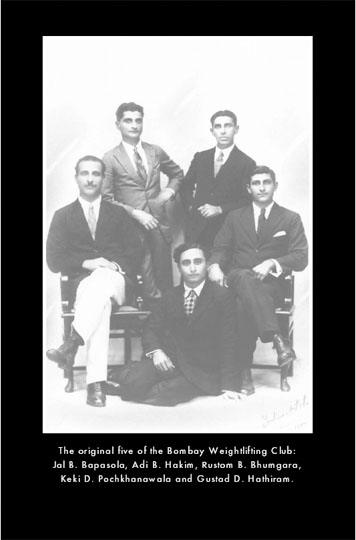
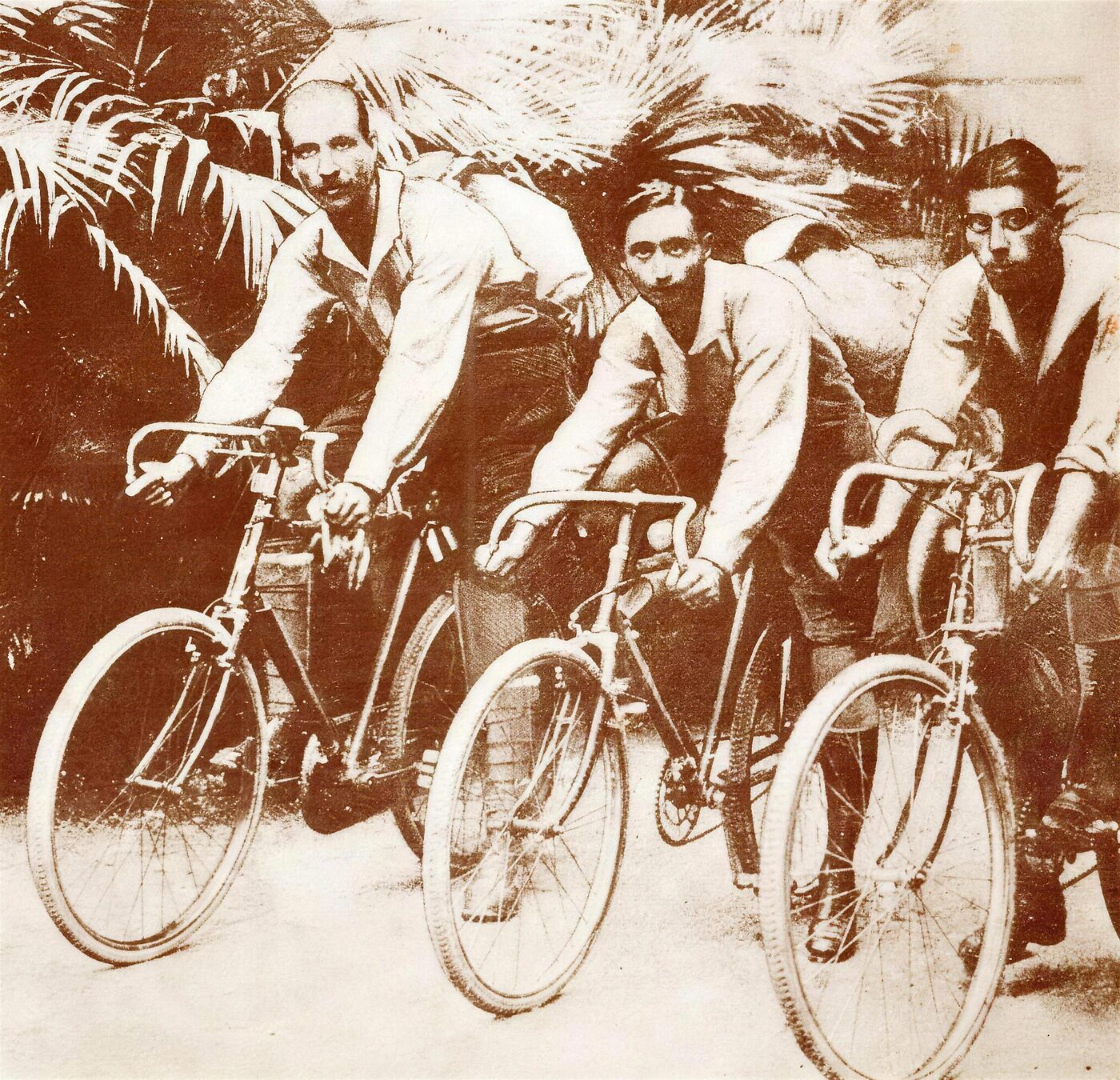
On the fifteenth of October 1923, six young men wheeled out of Bombay on bicycles. They carried a complete camera outfit, a doctor's dispensary in miniature, an enormous bundle of maps, a compass and the little money they had saved. Most of them had not told their families. One mother learned where her son had gone only when a letter arrived from Persia.
Four and a half years and seventy-one thousand kilometres later, three of them rode home. Rustom Bhumgara was one of the three.
We wanted to know the world more intimately, and to acquaint the world with India and Indians. Hakim, Bapasola and Bhumgara, years later
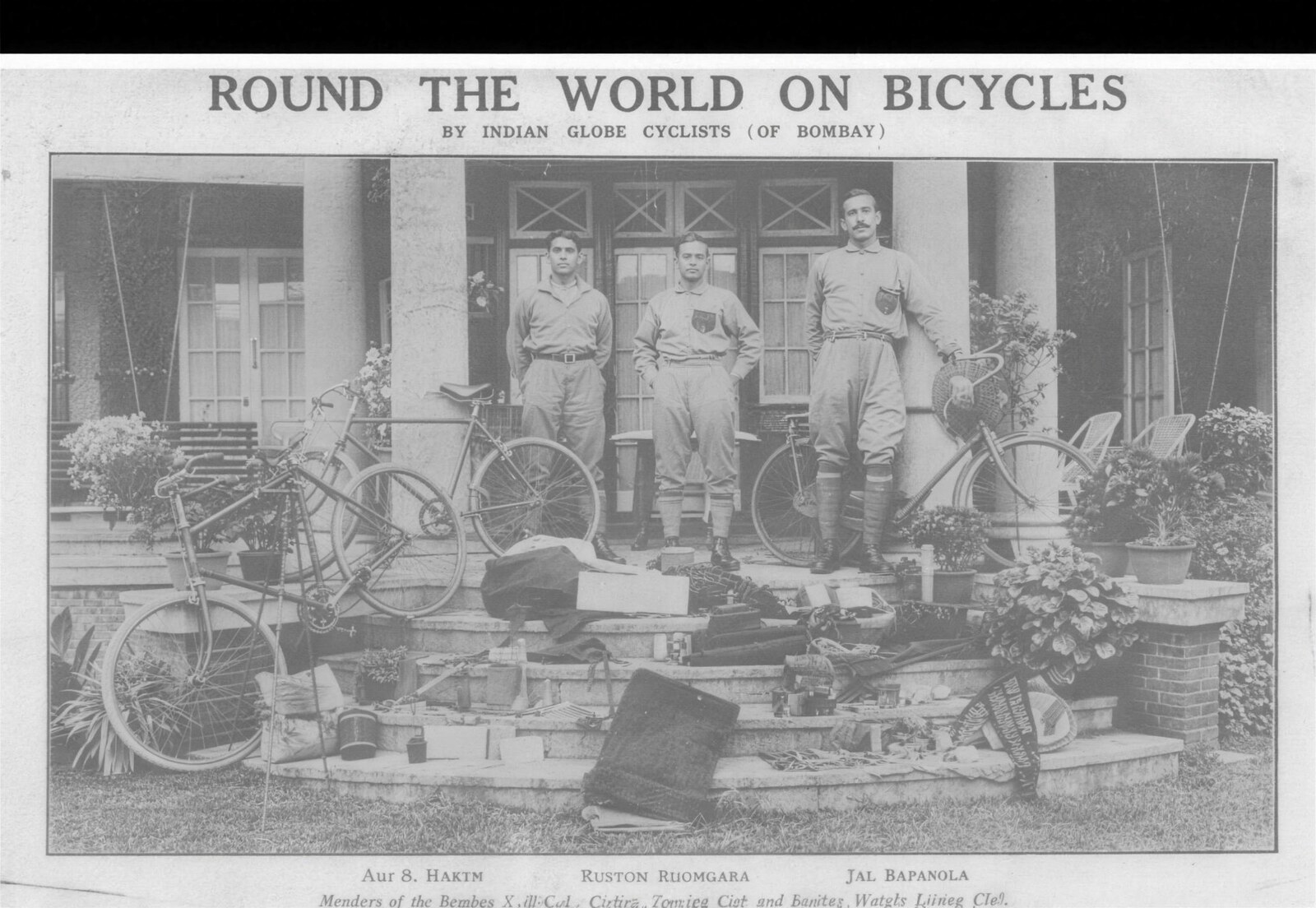
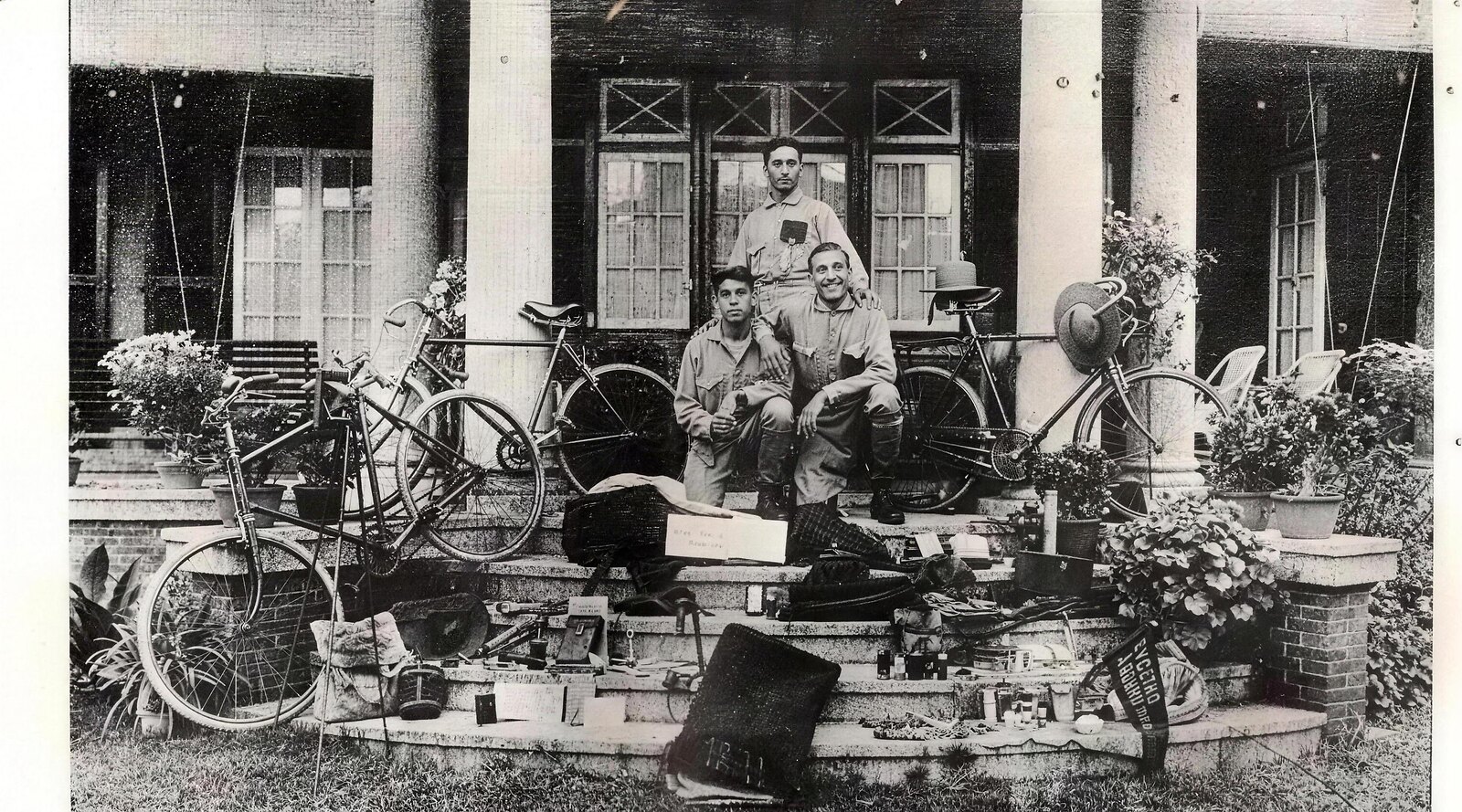
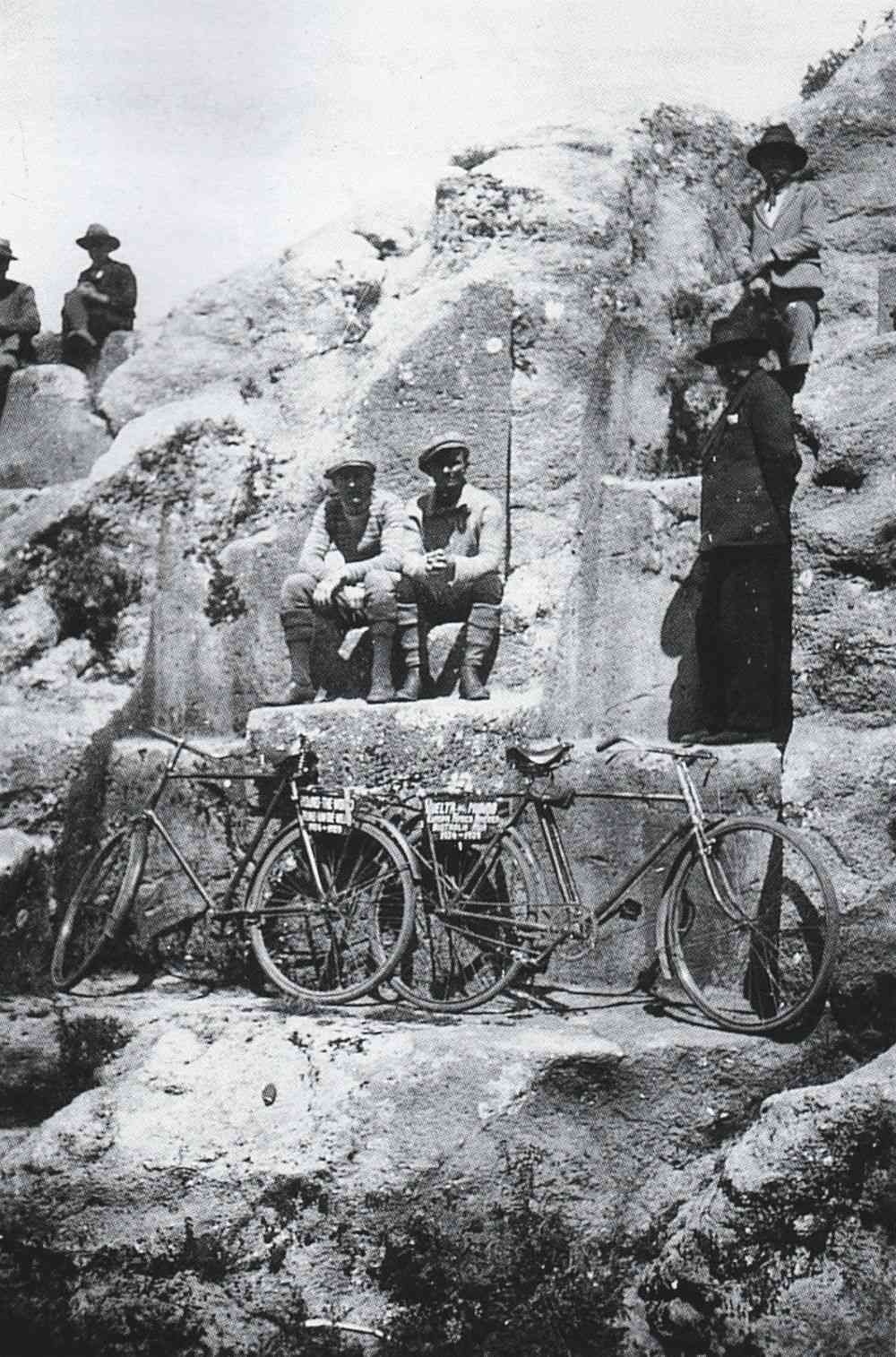
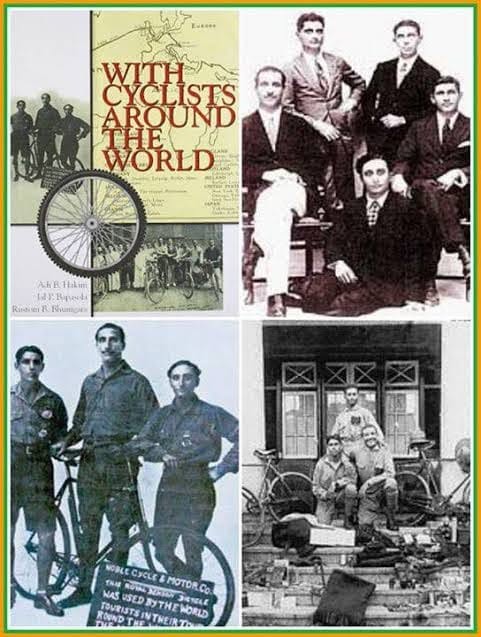
The six who set out from the Bombay Weightlifting Club, with everything they would carry laid out before them. Three of them would finish.
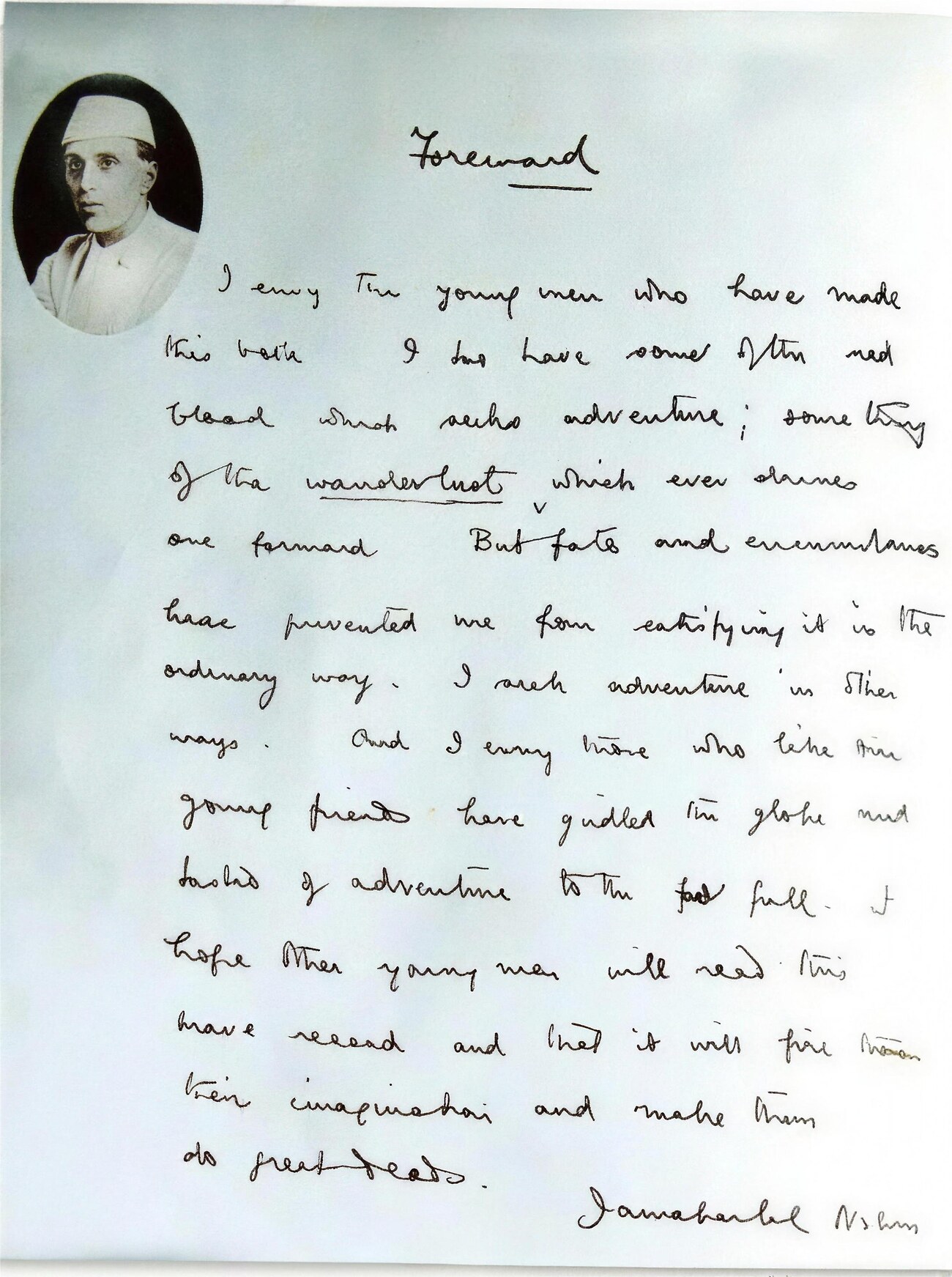
The foreword was written by Jawaharlal Nehru
I envy the young men who have made this book. I too have some of the red blood which seeks adventure, something of the wanderlust which drives one forward. But fate and circumstances have prevented me from satisfying it in the ordinary way, and I seek adventure in other ways. I envy those who, like our young friends, have girdled the globe and tasted adventure to the full. I hope other young men will read this brave record, and that it will fire their imagination and make them do great deeds. Jawaharlal Nehru, foreword, 1931
What they survived
They rode through things that should have killed them
The deserts
Six hundred and seventeen miles of Syrian sand where no cyclist had ever ridden, past human skeletons, in heat above 57 degrees.
The blizzard
Caught in a snowstorm on the Simplon Pass, dug out by St. Bernard dogs and the monks of the old hospice.
The jungles
Unarmed into tropical forest they knew harboured tigers, wild elephants, wild buffaloes and snakes.
Rifles to the forehead
Stopped by soldiers in war-torn China again and again, taken for spies, kicked and insulted when they proved who they were.
Hunger and fever
Days without food and days without water across the wastes, malaria waiting in the heat.
The machinery of empire
Arrested in Rome, fingerprinted and taxed in Indochina, and the colour line in America at its cruelest.
The three who finished
Rustom Bhumgara. Handsome looks and a hot temper, a sharp tongue and hands that would not stay still. The kind who leaped before he looked. With Cyclists Around the World, on Rustom
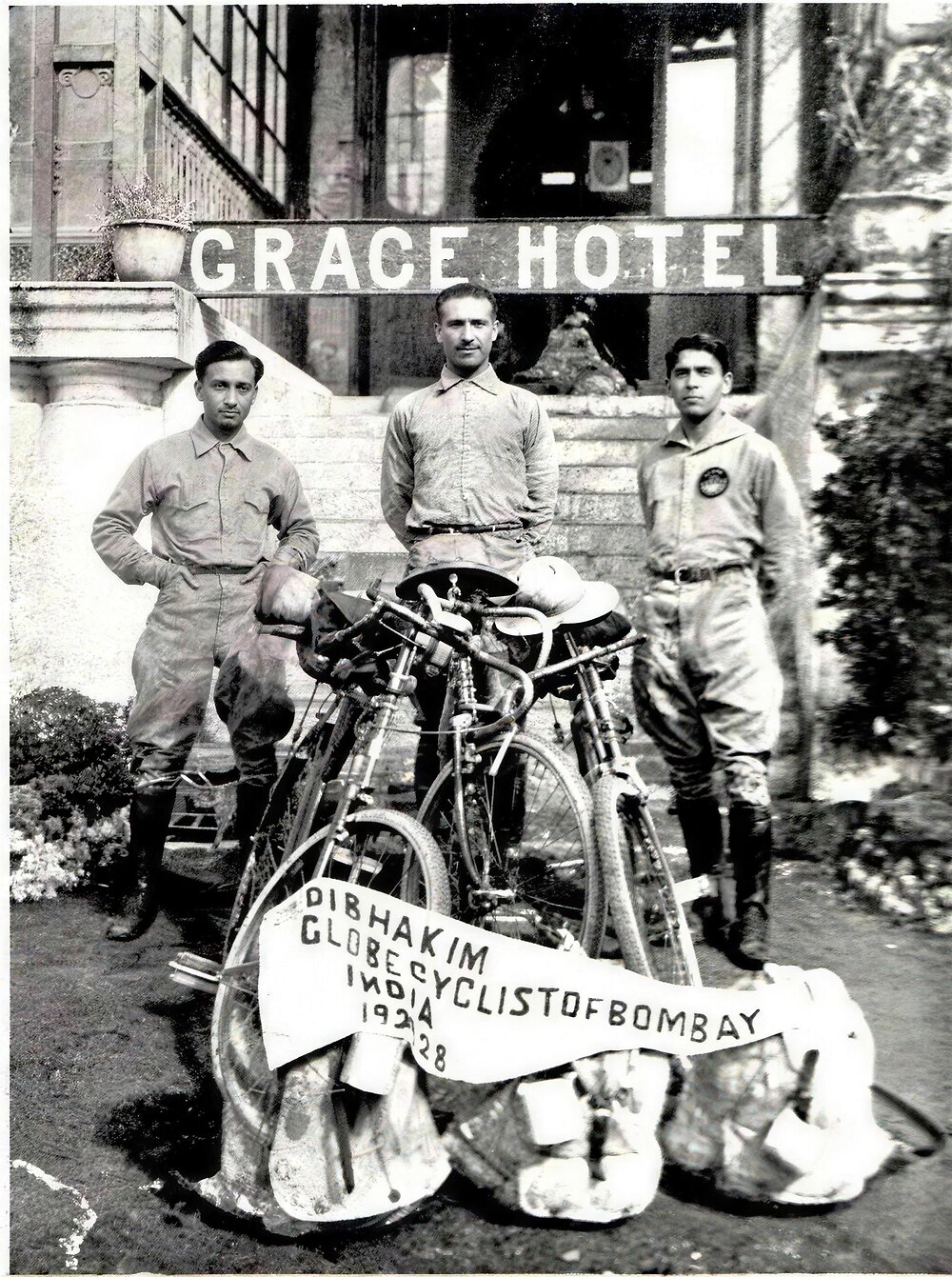
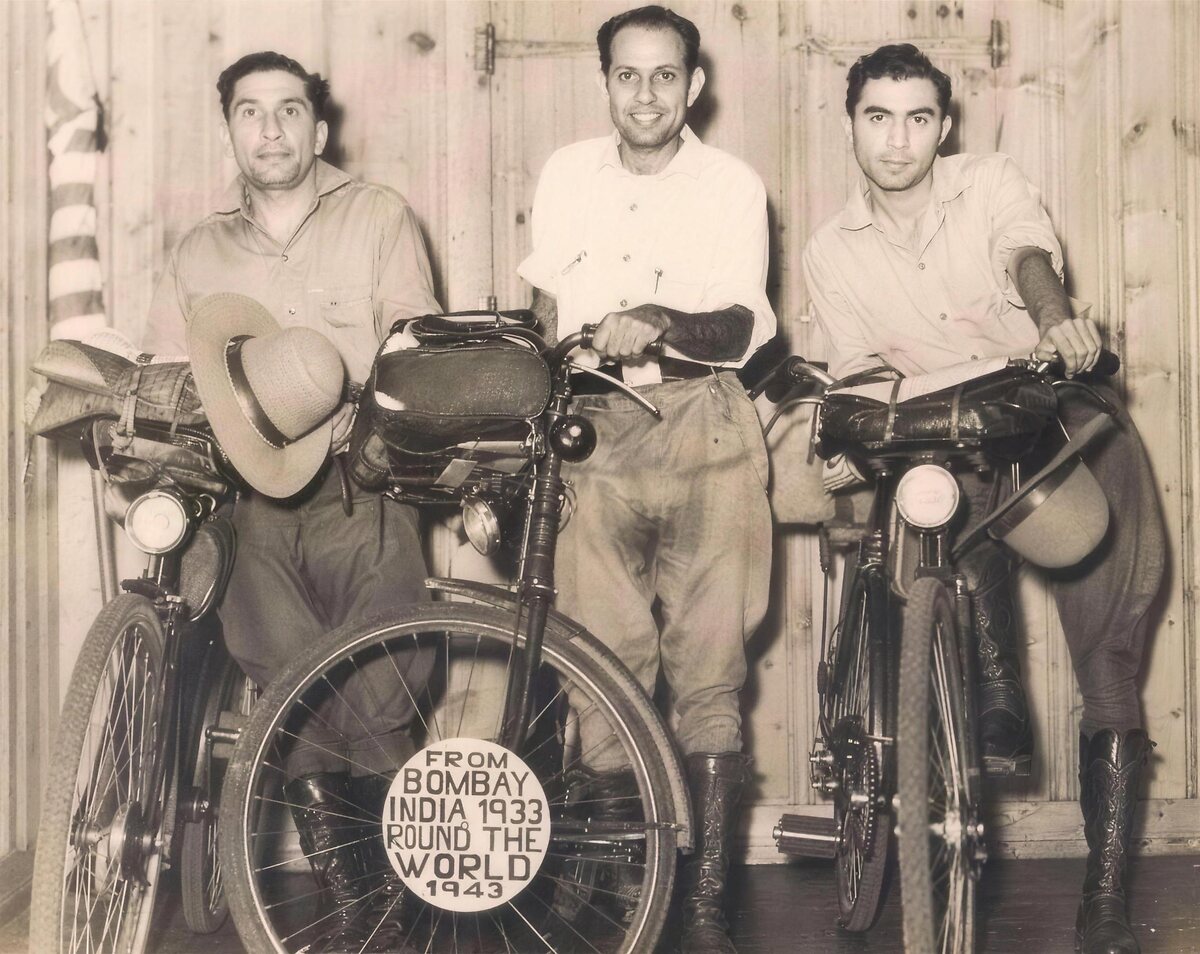
They were gym boys from the Bombay Weightlifting Club, the kind who could break stones on their chest with a hammer or drag a motorcar by a rope held in their teeth. Three years before they left, they had crowded into the Oval Maidan to hear a Frenchman who had walked from Europe to India, and the idea would not let them go. They rode British Royal Benson cycles on Dunlop tyres, in the quasi-military Scout uniforms they wore the whole way, and pointed themselves at a world that had never seen Indians arrive this way. The six who set out were known as the Super Six. Nariman Kapadia turned back at Tehran. In New York, Gustad Hathiram chose to stay, slipping a note under a hotel door before he vanished into his new life, and his closest friend Keki Pochkhanawala, disheartened, sailed home. Three rode on.
Think that I drowned in the Atlantic, my friends, for the Gustad you knew is now no more. Gustad Hathiram's farewell note, New York
He was barely heard from again. In 1930 he wrote home once more, asking only for a sudreh, a kusti and a prayer book. He died in St. Petersburg, Florida, in 1973, an auto mechanic to the end.
Fired by the intense desire to carry the name of Mother India to the far-flung corners of the world. With Cyclists Around the World, 1931
The route
Around the whole world
Seventy-one thousand kilometres, twenty-seven countries, the hardest overland roads they could find.
Bombay1923, the start and the finish
The itinerary
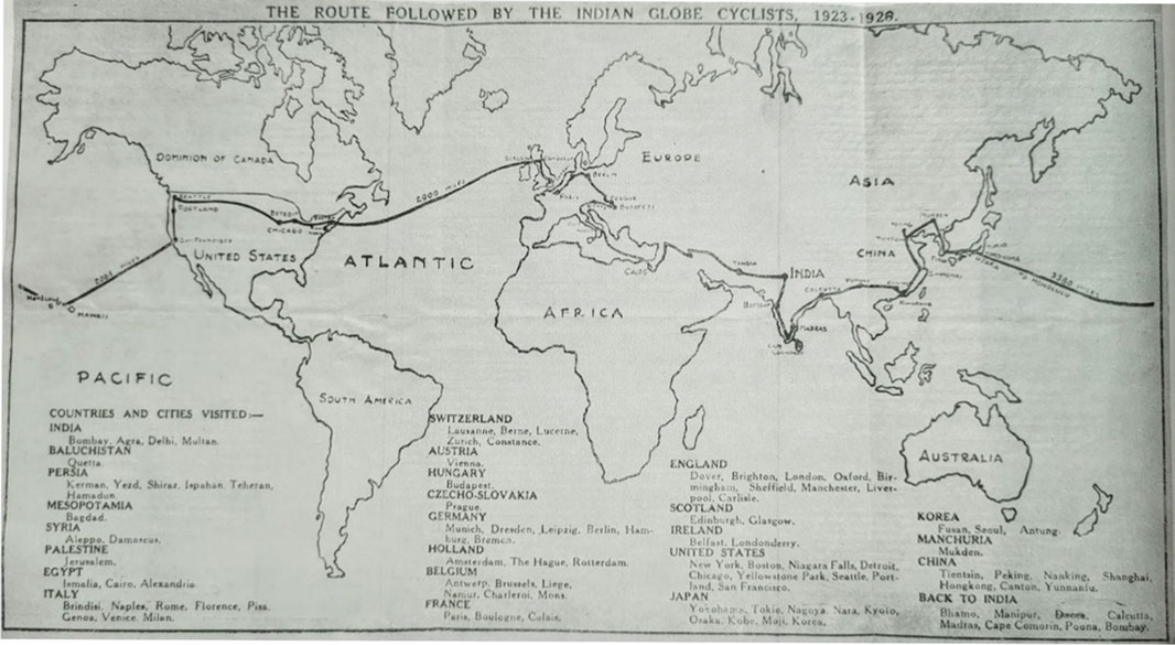
The deserts
Where no cyclist had ever ridden
Six hundred and seventeen miles of Syrian sand, and a record nobody had set.
They climbed out of India over snow at Prospect Point near Ziarat, eleven thousand feet up, and dropped into Persia. They had planned it this way, choosing deliberately the hardest overland desert journey on earth. They drank from mud pools in Bikaner shared with half-submerged buffaloes, and in Tehran the war minister, soon to be Reza Shah, offered them posts in his army. They rode on. In Baghdad they learned to keep the desert tribes friendly by hiding cigarettes inside their hollow cycle grips and handing them out as they rode. From Baghdad they pointed west toward Aleppo, past skeletons bleaching in the sun, in heat above fifty-seven degrees. They crossed the nine hundred and fifty-six kilometres of the Mesopotamian desert in twenty-three days, a record, on bicycles never built for sand, and were once saved from death by Bedouins they had been warned to fear. Further on, across a hundred and twenty-five miles of the Sinai where not an inch of ground was hard enough to ride, they rolled the machines along the railway tracks, walking the sleepers, eyes fixed on wheel and rail until their necks ached. Then, from Kantara to Cairo, they rode a hundred and fifteen miles in a single day, the sun still on the horizon, they wrote, as if waiting to congratulate them on their record run.
What was there to relieve the monotony, save the skeleton of some unfortunate victim, bleaching in the desert sun, exciting at once our sympathy and a gruesome interest? With Cyclists Around the World, crossing the Syrian desert
Our lives, we were told, were in grave danger from their predatory excursions. Instead, throughout our journey we found the Bedouins more a friend than an enemy. With Cyclists Around the World, on the desert tribes who saved them
It was raining sand. The cycles had by now disappeared. It was a day spent in hell. From the book, the sandstorm to Aleppo
The Alps
Pulled out of a blizzard by dogs and monks
On the Simplon Pass the snow nearly took them. The old hospice sent its dogs.
In Europe they scaled the Alps with the bicycles. On the Simplon Pass a snowstorm came down without warning and very nearly buried them, until St. Bernard dogs and the Augustine monks who keep the old hospice there brought them in alive. Europe itself surprised them, and not the way they had expected. The roads were bad, they wrote of their first miles in Italy, the houses dirty and the people dirtier, and it quietly destroyed the high opinion they had carried of the West.
The Simplon Pass, six thousand feet up, where the snow came down without warning and very nearly buried them alive.
Rome, 1925
Mistaken for spies, then received by the Pope
A Roman jail cell, the Vatican and Mussolini, in the space of one week.
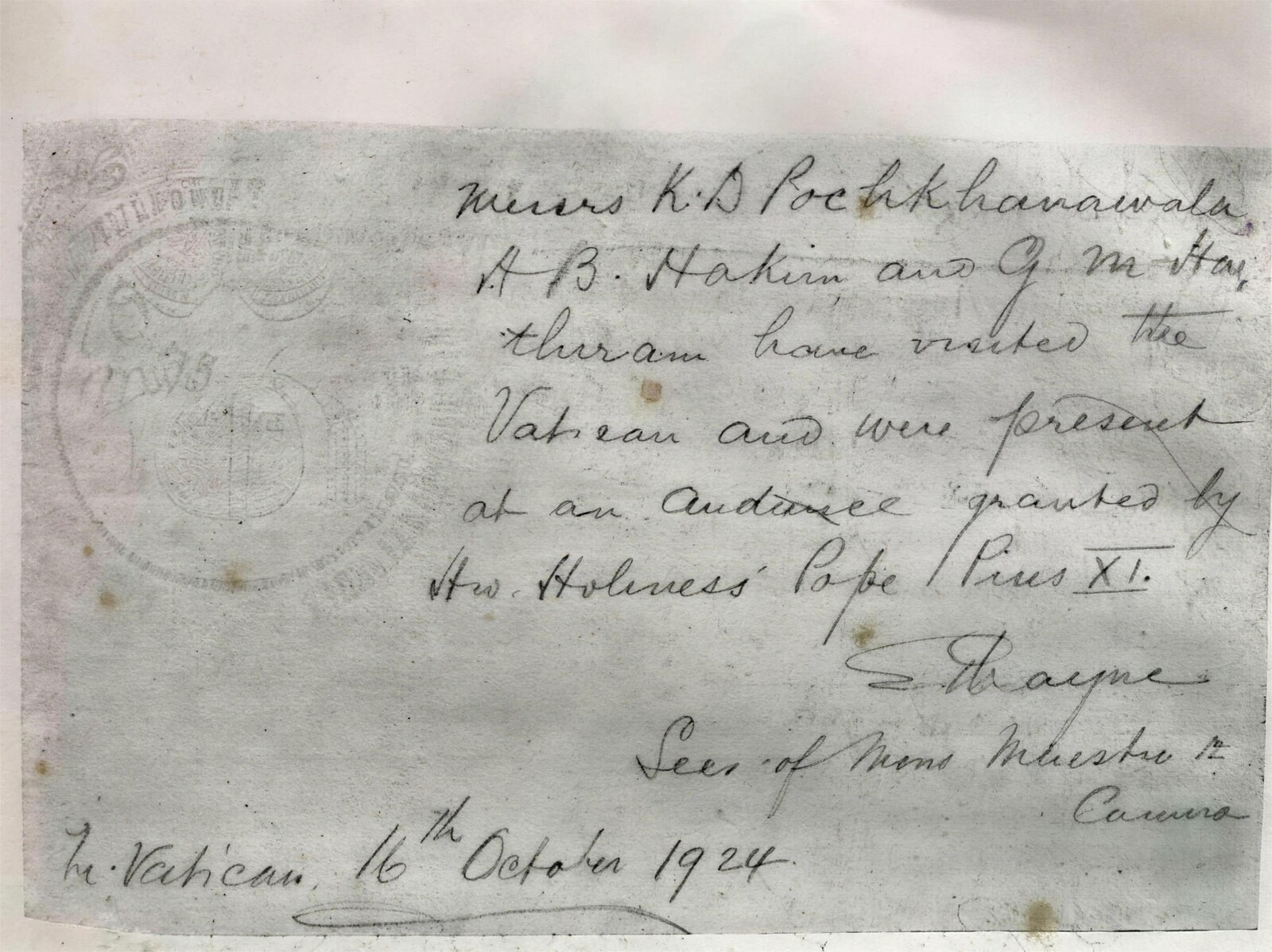
In Rome the police took them for spies, three Indians on bicycles carrying passports nobody recognised. It was sorted out. Then, improbably, they were granted an audience with Pope Pius XI at the Vatican, and they met Benito Mussolini. Two of the most powerful men in Europe, and a few young men from Bombay on bicycles in the room. The Vatican wrote them a note to prove it had happened.
Britain
Raleigh changes its mind
The company that would not back them now begged them to ride its bikes.
Back in Bombay the Raleigh Cycle Company had refused to sponsor them, certain that three boys would never make it. By the time they reached England, Raleigh was asking them to ride its bicycles. They rested twenty-five days at the Zoroastrian House in London, and they wrote, with some delight, that their female admirers were many, that English girls would flock to them as though they were renowned celebrities, even jostling one another to secure their autographs.
We did not believe that you boys would be so successful. Raleigh Cycle Company, in England
America, 1926
Coast to coast, and the colour line
Eight thousand kilometres, Ford's assembly line, and the ugliest thing they saw anywhere.
They crossed the United States in five months, and worked two of them on the line at Henry Ford's Model-T factory in Detroit to refill their pockets. In Chicago they stayed with Indian students who fed them food they had missed for years, and were grieved to find those students washing dishes and waiting tables in fashionable hotels. As light-skinned Parsis they were mostly spared the worst, but they watched the colour line up close and named it for what it was.
Indians with darker complexion are mistaken for negroes and subjected to inhuman treatment. With Cyclists Around the World, on America
They had beaten the deserts and the mountains. Now the great oceans, by steamship, the bicycles crated in the hold.
Japan, Korea and China, 1927
First into the Hermit Kingdom
The first cyclists ever to enter Korea, and a line about China that came true.
They sailed to Japan, then became the first cyclists ever to ride into Korea, the country the world still called the Hermit Kingdom. In China, deep in its warlord fighting, soldiers stopped them again and again. Near Shanghai they shaved off their beards, knowing they would soon be presented to many a fair dame who would not forgive the bushy growth. One man in China, certain that every nation had one, demanded that Hakim sing the Parsi national anthem. Hakim sang a Gujarati hymn instead, and when asked who had composed it, gravely gave the name of Rabindranath Tagore.
Very frequently rifles were pointed at our forehead. When we established our identity, the soldiers kicked us and insulted us. With Cyclists Around the World, crossing China
All the way home they carried the memory of Miss Peggy, a cheerful French blonde they had met in Rangoon, whose company, they wrote, put the pep into what might have been a dull ride. And Hakim, watching the whole country turn, wrote something that reads now like prophecy.
A new China has been born in the world. Few see her, but those who do see realize how she will affect the world's course and shape the world's history. Adi Hakim on China, 1927
Indochina, Siam and Burma
Tigers, bandits and the machinery of empire
The closest stretch to home turned out to be the deadliest, and the most insulting.
The last leg was the hardest. They rode unarmed through jungle thick with tigers and snakes, and met bandits on the road. But the cruelty that stayed with them was not the wild country. It was the colonial border. In French Indochina they were marched into a lock-up, cross-examined, fingerprinted on all five fingers and made to pay a poll tax, simply for the offence of having been born Indian.
A heavy poll tax is levied for the terrible offence the Indian has committed of having been born an Indian. Our blood boiled. With Cyclists Around the World, on French Indochina
We entered the thickets of a tropical jungle, unarmed, knowing it harboured tigers, wild elephants, wild buffaloes and wild deer. With Cyclists Around the World, the last jungles
How three boys paid for a planet
The hustle behind the legend
No sponsor, no support car. They performed their way around the world.
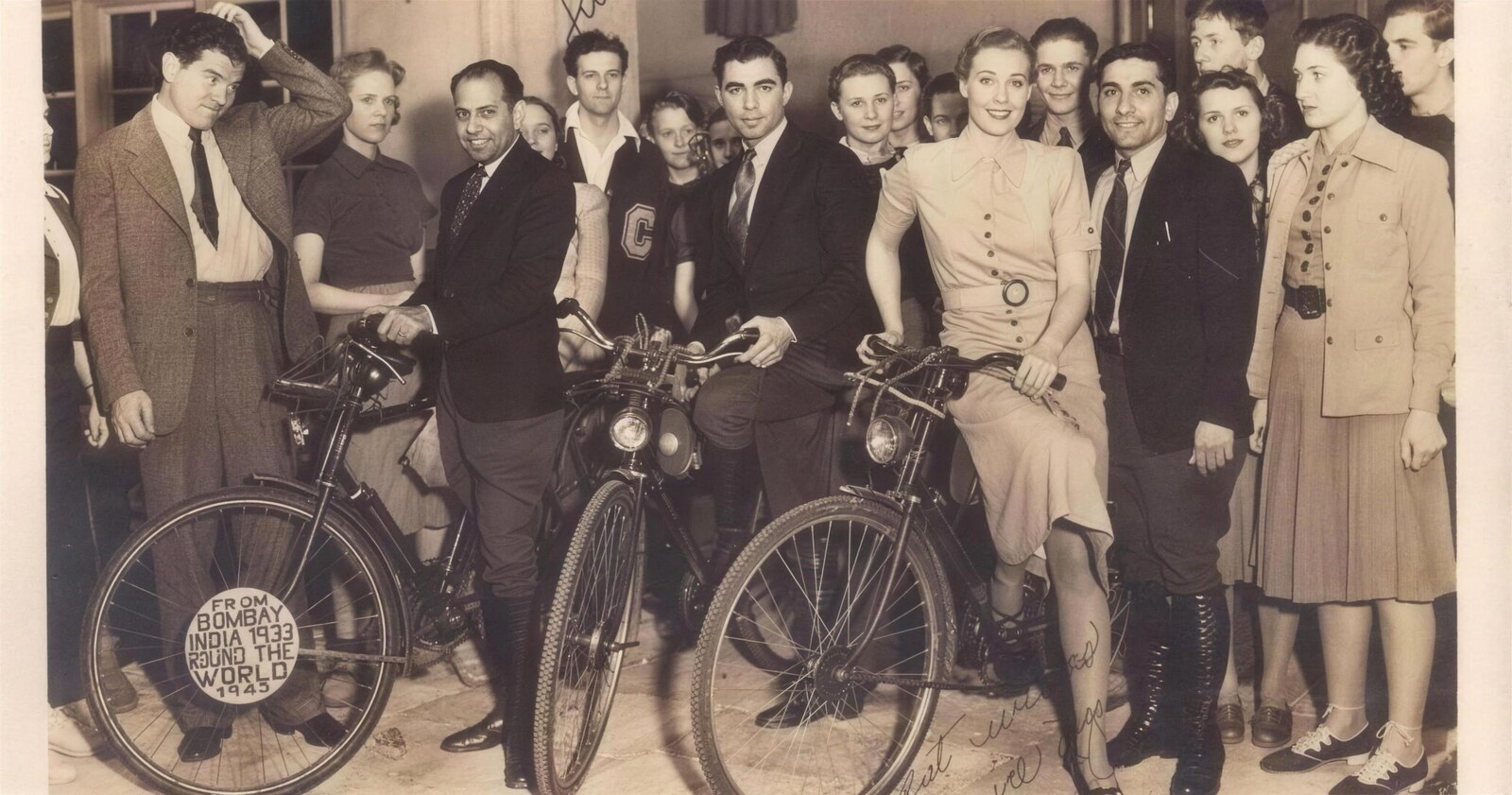
There was no backer and no support car. They paid their own way by performing. In Persia, Rustom pulled a motorcar loaded with five passengers down the road by a rope gripped in his teeth, and in Shiraz the others laid stones on their chests and had them broken with hammers for paying crowds. They staged boxing matches, sold postcards of themselves they had signed by hand, and gave magic-lantern slide shows arranged by local YMCAs in Zurich, Chicago and Shanghai, sometimes to several thousand people at once. They slept in the homes of Parsi families, took free tyres from Dunlop, and when their tyres wore through in the desert they stuffed them with grass and rode on. Rustom, the only strong swimmer among them, swam the Suez Canal while the bicycles crossed by ferry, and at a flooded river in the hills near Manipur he carried his companions over one at a time on his back.
What they carried home
0 signatures, 26 medals
All the way round the world they carried a book and asked the people they met to sign it. They came home with a page of heads of state. The names were not only trophies. Shown to a suspicious policeman or a border officer, a famous one could be the thing that got them through.
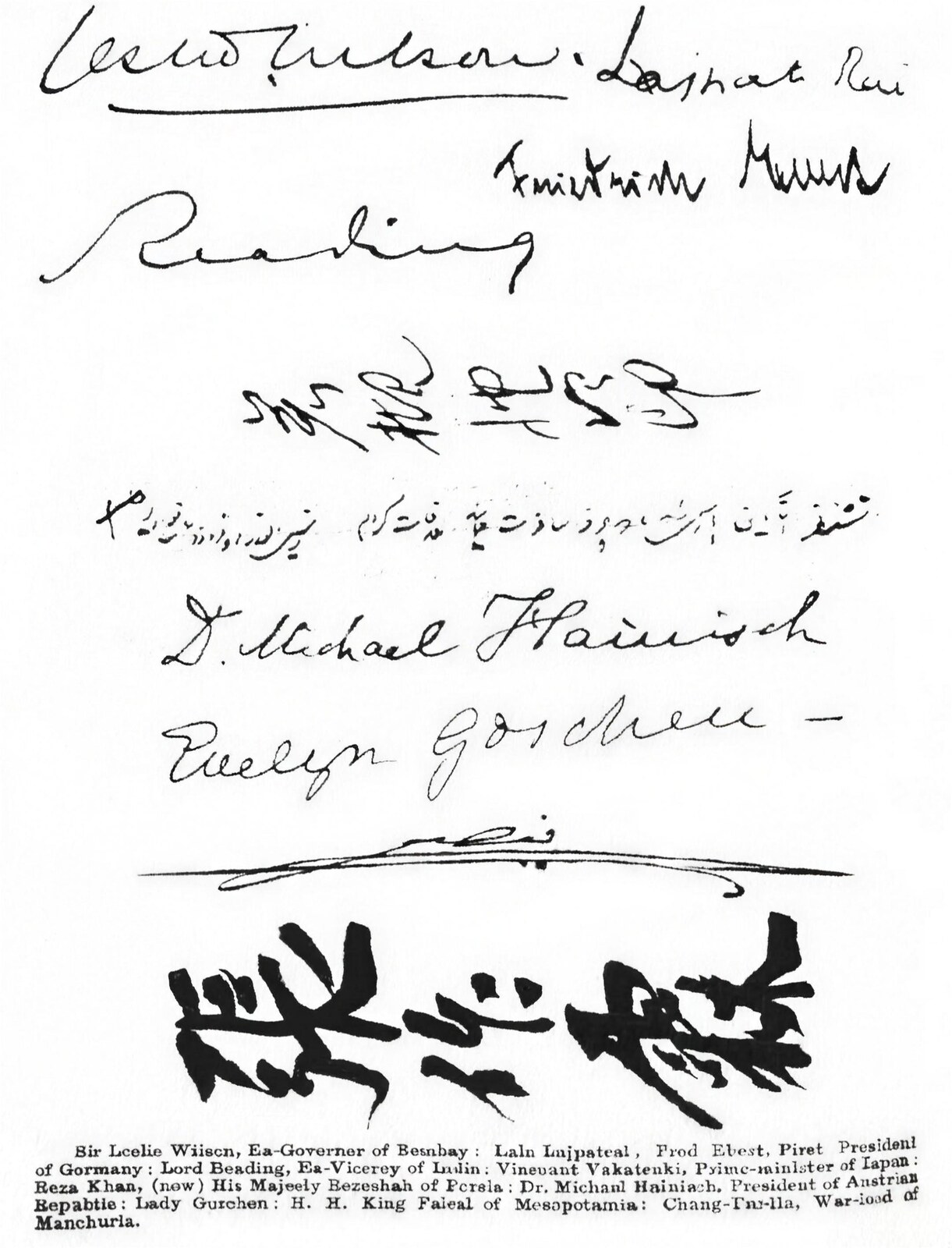
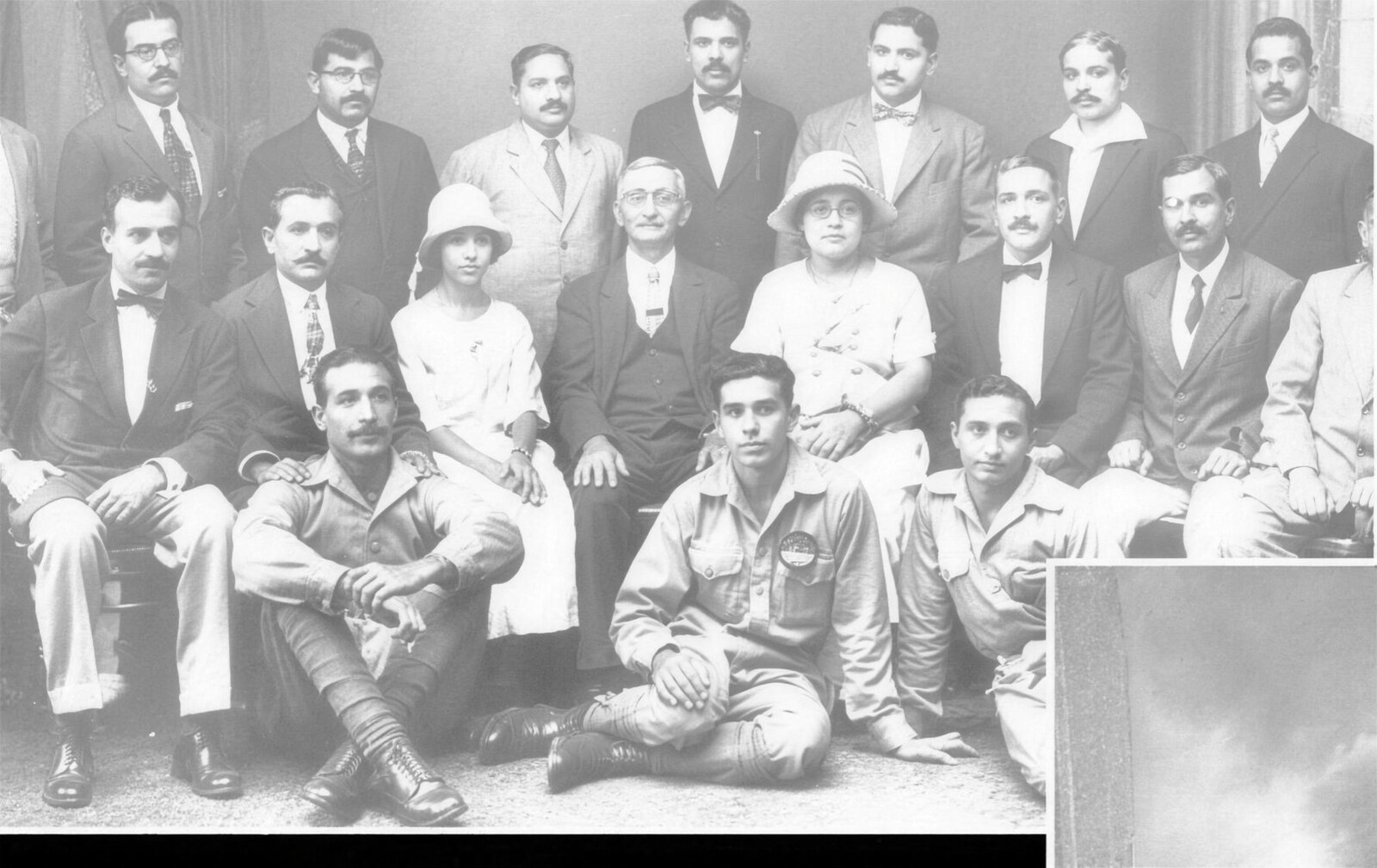
Jailed as spies in Chiavari, they showed the guard Mussolini's signature. The effect, they wrote, was electrical. They walked free.
March 1928
Heroes of the day
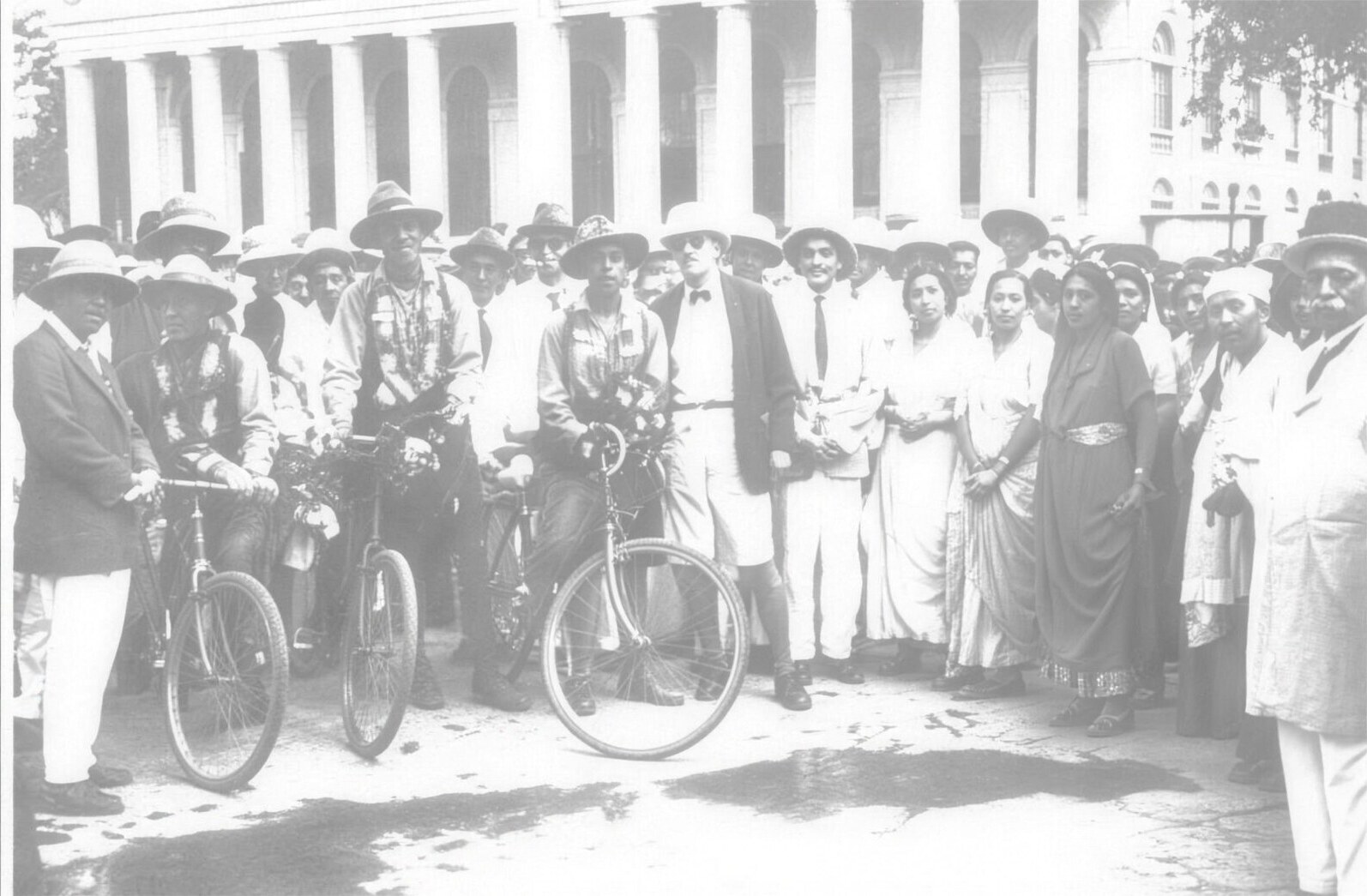
Garlands in Bombay, their names on the wires, the first Indians to ride around the world.
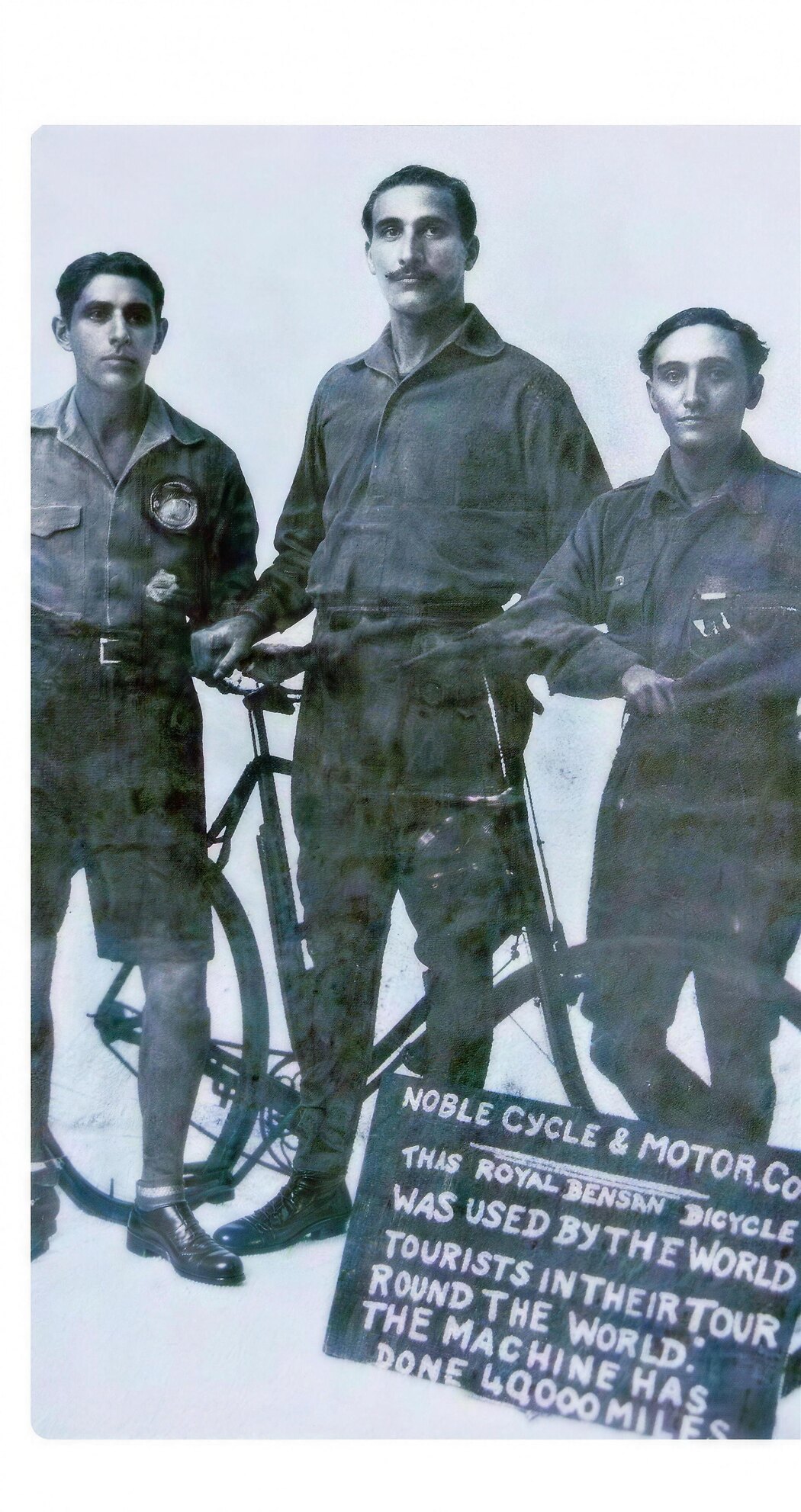
By the time they reached Delhi, Reuters had carried their names around the world, and the headlines had followed them home. They had set a world record on the road, a hundred and seventy-one miles in sixteen hours, and they were the first cyclists ever to cross the deserts of Persia, Mesopotamia, Syria and Sinai, and the first to ride across Korea, the Hermit Kingdom. They rolled back into Bombay in March 1928 to applause and garlands. The National Herald called them the heroes of the day, men who had brilliantly served their country and shown that India could produce young men of adventurous spirit as well as any nation on earth. They never saw it as a stunt.
Were we happy? Yes, you bet, we sure were. We felt proud we did our wee bit for Mother India, and showed that the sons of Mother India were as able, as enterprising, as courageous as the children of any other nation in the world. With Cyclists Around the World
We want you to look at our tour from another angle of vision. The youth of today is the statesman of tomorrow. If our adventure teaches them that everything comes to him who tries, that you never know your own powers unless you have put them to the test, and that Mother India lacks no sons capable of holding their own against the nationals of any other country, then we have not lived through four years of difficulties and dangers in vain. With Cyclists Around the World
The book
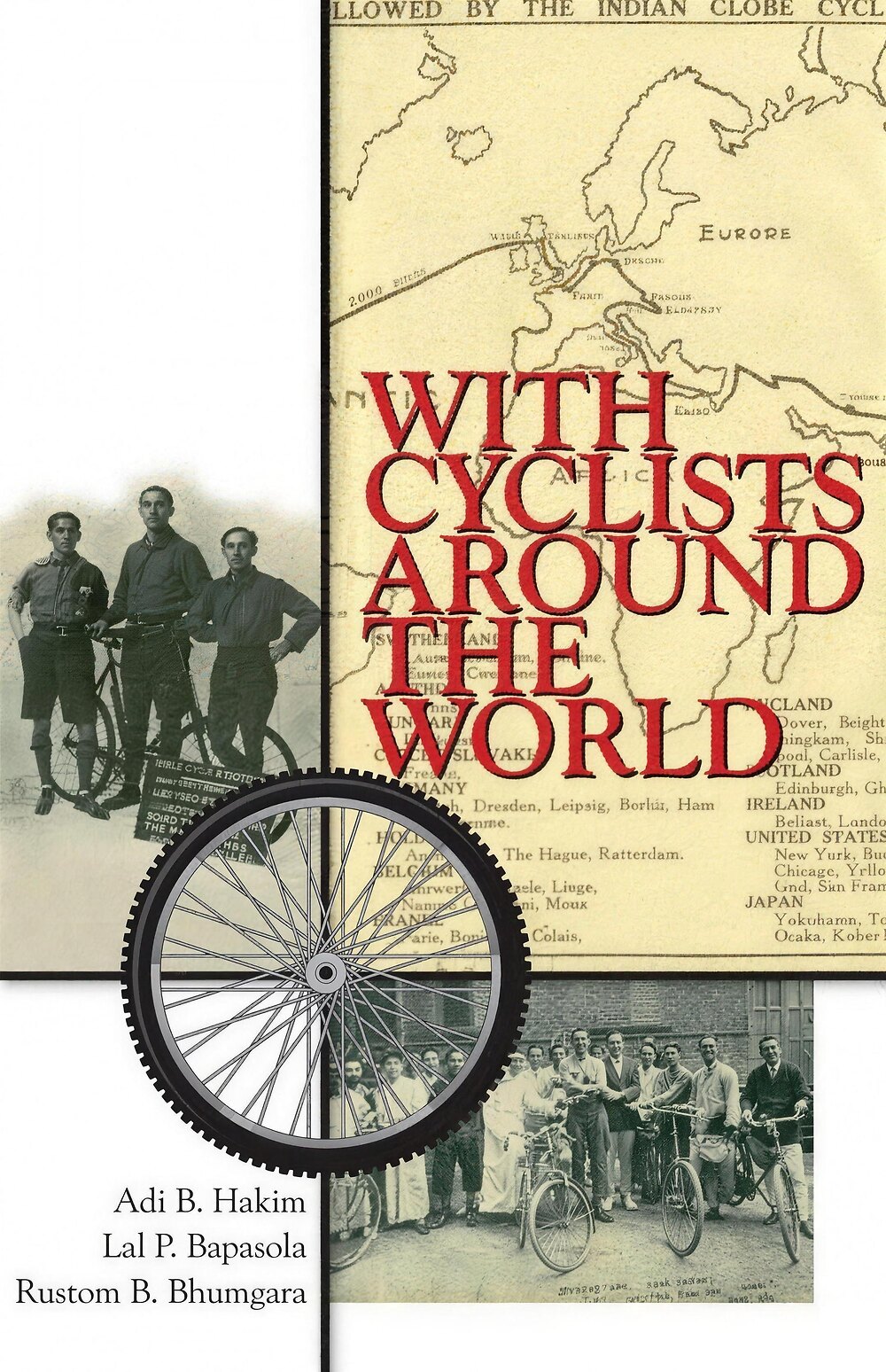
With Cyclists Around the World
In 1931 the three of them set the whole journey down in a four hundred and thirty page travelogue, describing every stage in minute detail, with Nehru's foreword in the front. In 2017 the cyclist Anoop Babani found a copy and, with the writer Savia Viegas, tracked down the families and the photographs and carried the story to a new generation. It is still in print today.
After the ride
The boy who carried India's name kept fighting for it
Rustom came home from the world and gave the rest of himself to the freedom struggle.
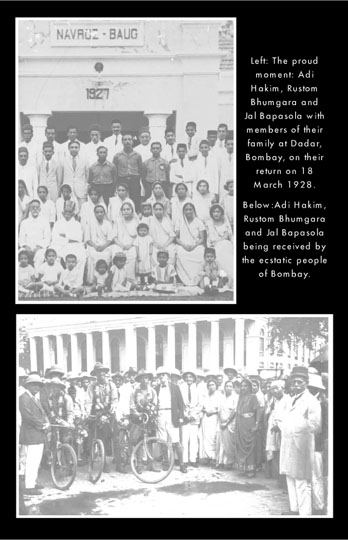
Rustom Bhumgara did not settle into a quiet life. He joined the Indian National Congress, was made a general officer commanding its volunteers, and threw himself into the Satyagraha campaigns of the late 1920s and 1930s. The young man who had carried India's name around the planet spent the years that followed fighting for India at home.
He was jailed in Yerawada prison, at the same time as Gandhi.
What they started
A small craze for the impossible
Their ride lit a fuse that burned for the next twenty years.
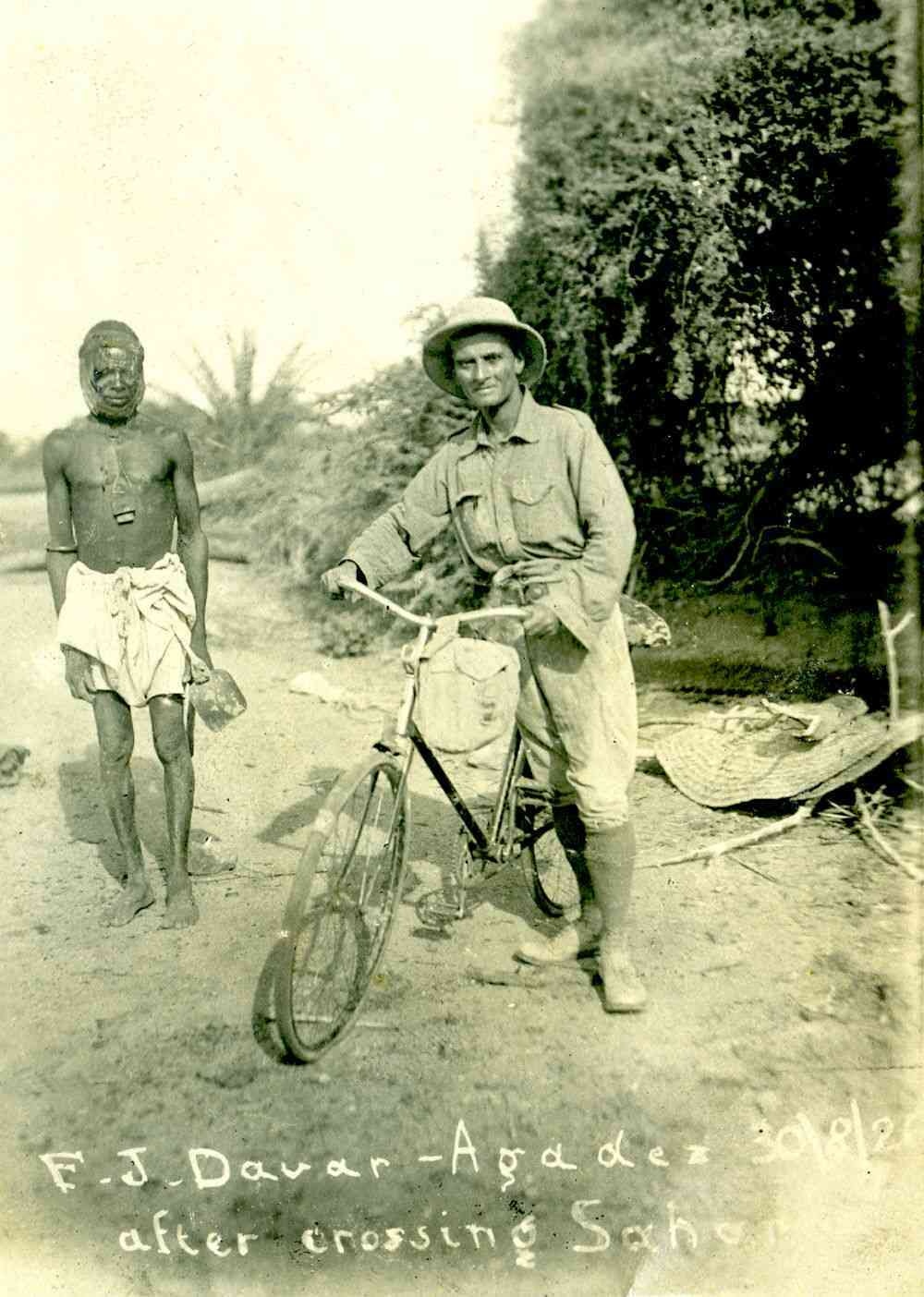
They were not the last. Framroze Davar, a Bombay sports journalist, set off alone, met the Austrian Gustav Sztavjanik in Vienna, and the two spent seven years crossing the Sahara and hacking through the Amazon from coast to coast, a nine month passage of uncharted forest that had killed explorers before them. A third group, Keki Kharas, Rustam Ghandhi and Rutton Shroff, rode eighty-four thousand kilometres and were marooned in the Afghan desert for days without food or water. Between 1923 and 1942, ten young Parsi men from Bombay rode out to take on the whole world.
seen around the world
A century on, the story keeps travelling
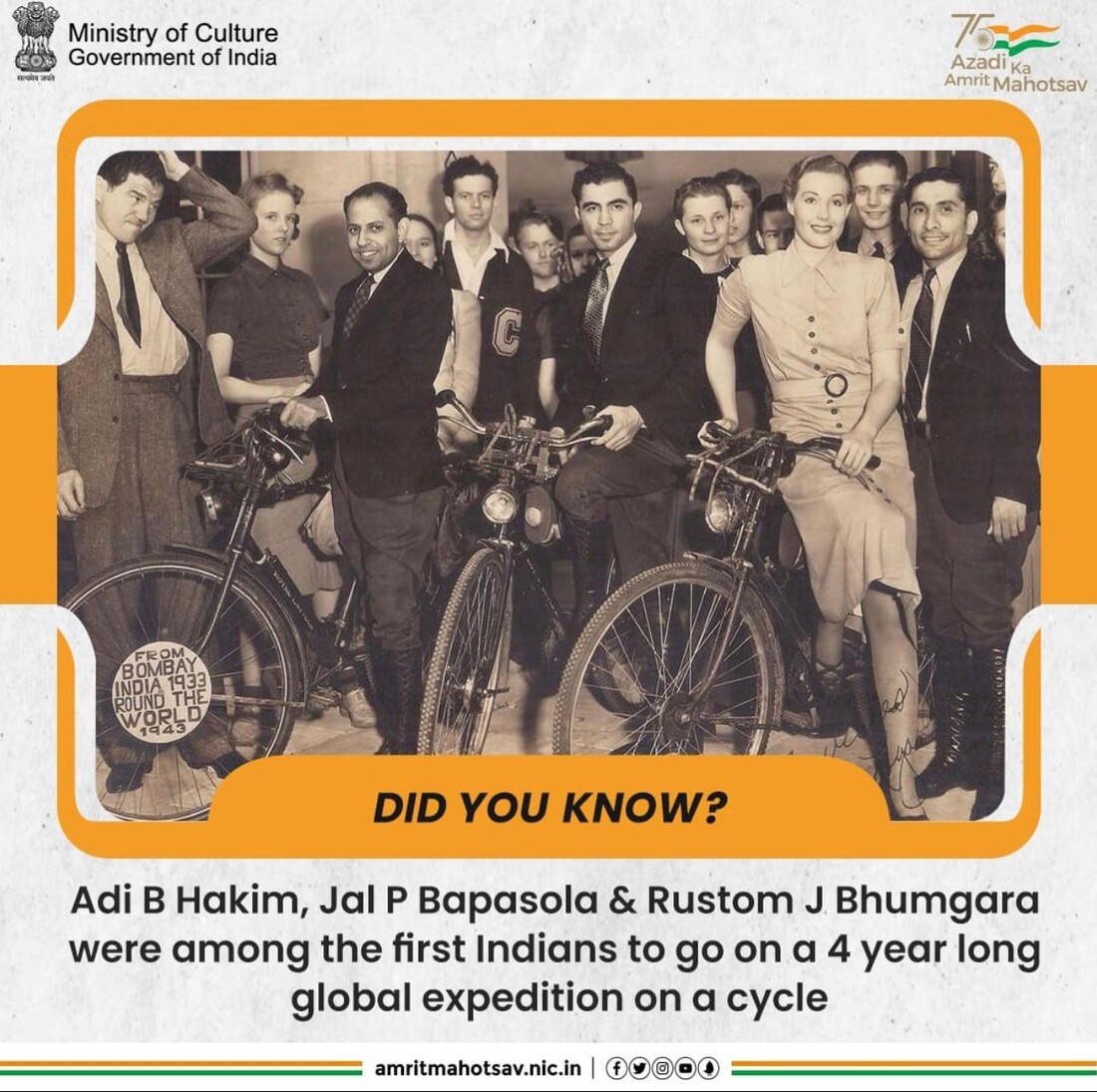
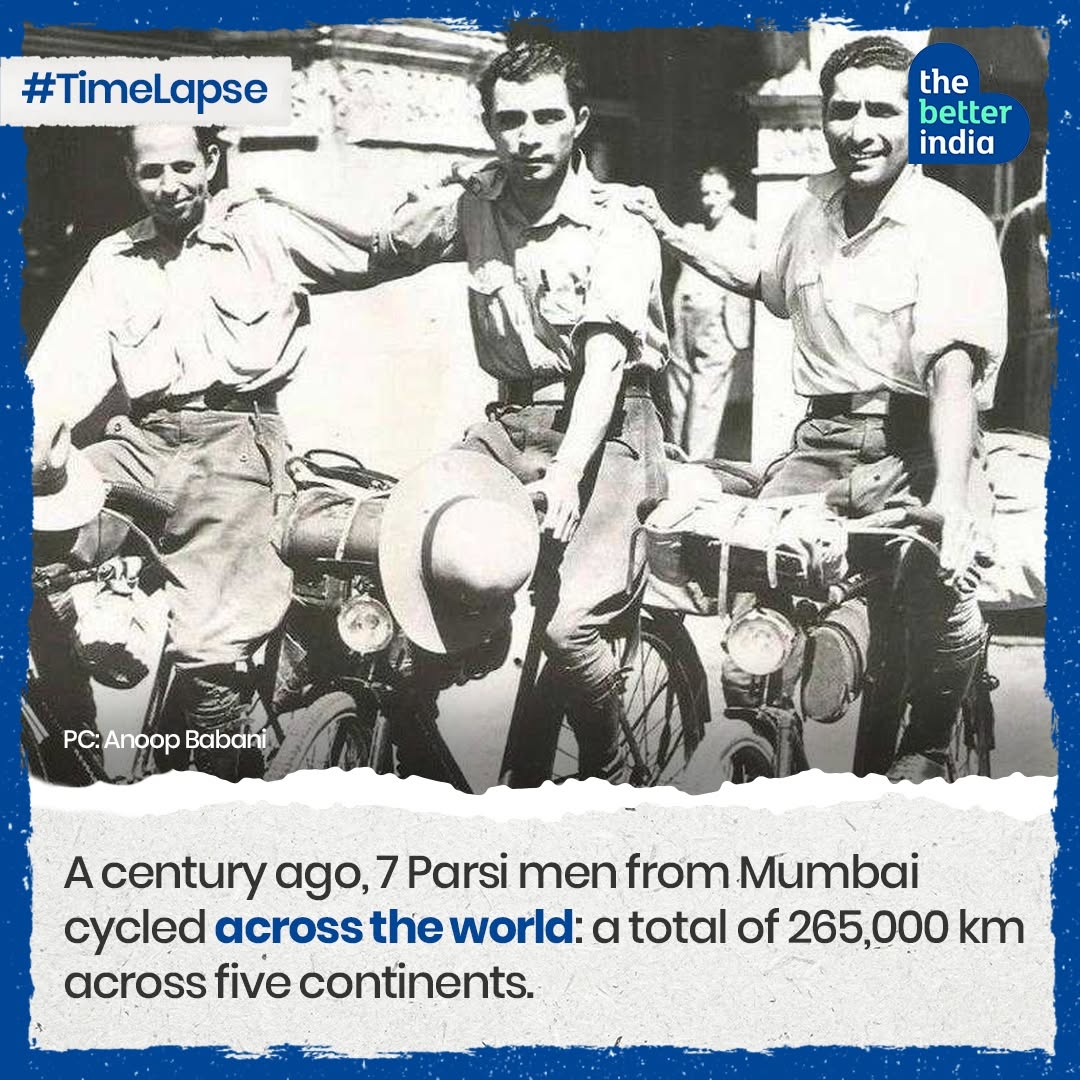
A hundred years after they rode home, the three are still being written about, shared and remembered, from Mumbai newsrooms to feeds across the world.
The archive
Read the whole story
Articles, studies, photographs and films gathered on the ride, in one place.